
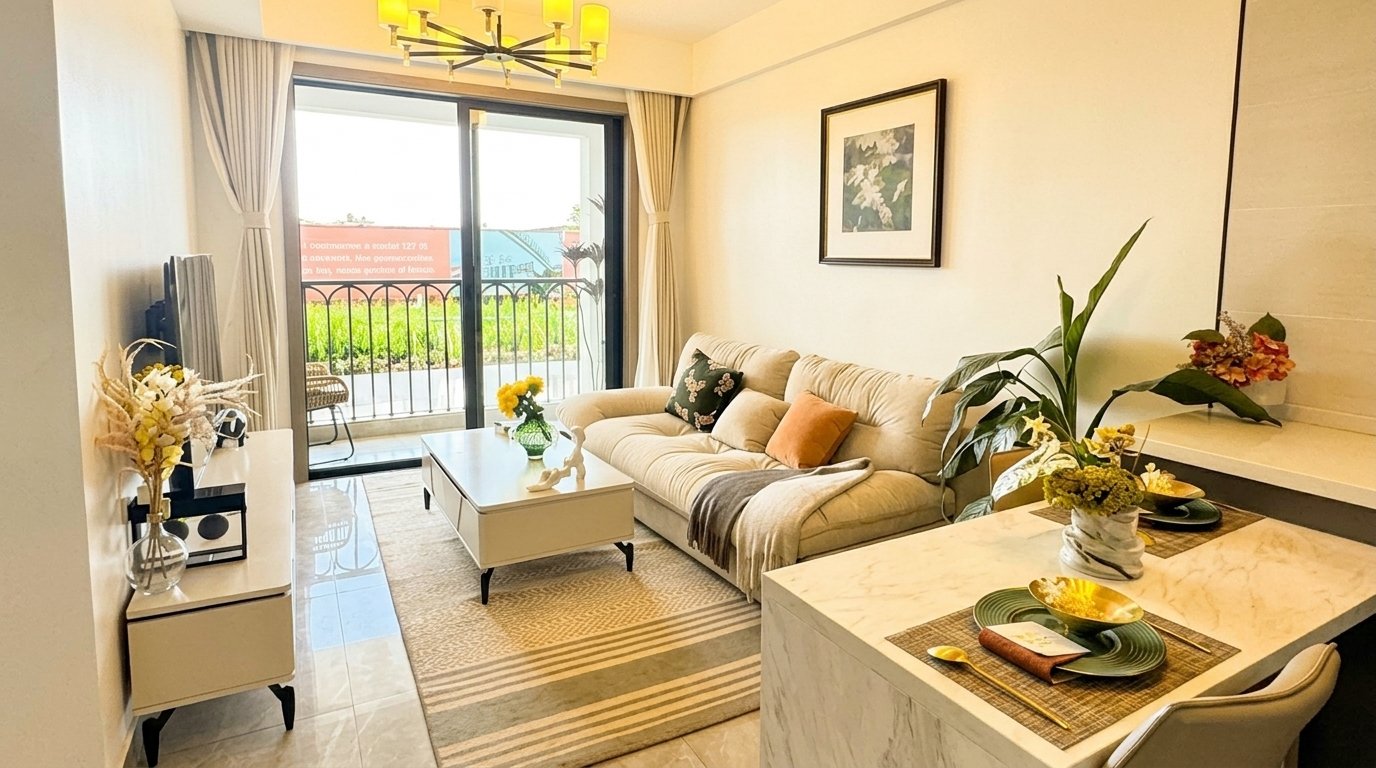
A small room doesn’t have to feel cramped. You don’t need to knock down walls or hire a renovation team to get more breathing room.
The way you use light, furniture, color, and open space can make a small home feel much bigger. By making a few intentional choices around sightlines, storage, and proportion, you can transform even the tightest layout into an open, comfortable living space. Here is how you can make that happen.
Arrange and Choose Furniture for Open Sightlines
When heavy furniture sits flat against your walls, it tends to box the room in. You can easily fix this by guiding how the eye moves across the space.
- Create Open Space Around Furniture: Try pulling your sofa and tables just a few inches away from the wall. That small gap creates subtle shadow lines and depth, which instantly makes the room feel less crowded.
- Opt for Exposed Legs and Low Profiles: Look for pieces raised on slim legs or designed with low silhouettes. When you can see the floor continuing underneath a sofa or table, the entire piece feels lighter. Glass or acrylic coffee tables work remarkably well for this exact reason.
- Prioritize Scale Over Quantity: Filling a room with multiple small chairs, side tables, and footstools can quickly create visual chaos. You will get a much cleaner look by swapping those scattered pieces for one well-proportioned sofa and a single side table.
Use Light Colors to Make Walls Recede
Color completely changes how you perceive space. Dark, contrasting walls tend to pull surfaces inward, while lighter, unified shades help push them outward.
- Adopt Tone-on-Tone Palettes: Consider matching your wall color closely with your major furniture. When your sofa shares a similar shade with the wall behind it, the hard edges disappear and the boundaries of the room naturally soften.
- Paint Trim the Wall Color: Traditional white baseboards and window frames create high-contrast borders that highlight a room’s physical limits. Painting your trim the exact same color as your walls allows your eye to glide smoothly across the entire surface.
- Draw the Eye Upward: You can also trick the eye into seeing taller ceilings. Painting beams, adding full-height wall paneling, or using vertical color accents draws attention upward so low ceilings don’t feel overwhelming.
Maximize Light and Mirror Placement
Good lighting naturally opens up dark corners that make rooms shrink, while reflective surfaces give you the illusion of extra space.
- Bounce Natural Light: A simple trick is hanging a mirror directly opposite or adjacent to a window. It immediately catches natural light and redirects it deeper into the room while reflecting outside views.
- Hang Curtains High and Wide: Instead of mounting curtain rods right above the window frame, place them up near the ceiling line and extend them wider than the window itself. Choosing sheer, lightweight fabrics keeps daylight flowing in even when the drapes are closed.
- Layer Accent Lighting: Relying on a single overhead bulb creates harsh shadows in the corners. Instead, try mixing slim wall sconces, small table lamps, and under-shelf lighting to distribute a warm, even glow at different heights.
Select Multi-Functional Furniture and Vertical Storage
When square footage is limited, every piece of furniture in your home needs to earn its keep without taking over the floor.
- Pick Dual-Purpose Pieces: Storage ottomans, benches with hidden shoe racks, and nesting tables are great options here. They give you a place to tuck everyday items away without adding bulky cabinets to the room.
- Utilize Vertical Wall Space: Instead of wide chests or sprawling media units, go upward with tall, narrow bookcases or wall-mounted shelves. They draw your eyes toward the ceiling while leaving your floor area open and clear.
- Keep Elevated Surfaces Clean: Be careful not to pack your top shelves with heavy items. Keeping higher surfaces lightly styled stops the top half of the room from feeling top-heavy or cluttered.
Style the Space Without Adding Visual Noise
Decor gives your home its personality, but too many small accents can easily overwhelm a compact layout.
- Focus on Anchor Decor: Rather than creating a busy gallery wall with dozens of tiny frames, try hanging one large piece of art or an oversized mirror. It gives the room a clear focal point.
- Add Depth Through Texture: You don’t need small knick-knacks to make a room feel warm. Woven fabrics, linen cushions, warm wood tones, and indoor plants add plenty of character without cluttering your surfaces.
- Leave Breathing Room: Permit yourself to leave a few surfaces and corners completely bare. Those empty spots act as visual rest stops that highlight the open space you’ve created.
Common Small-Space Decorating Mistakes to Avoid
A few easily overlooked habits can make a well-decorated room feel smaller than it really is:
- Buying Furniture Without Measuring First: It helps to map out your floor area and walkways with painter’s tape before buying. A couch that looks compact in a high-ceiling showroom can easily overpower a small living room.
- Blocking Natural Light Sources: Positioning tall bookcases or heavy furniture near windows cuts off your main source of daylight and instantly shrinks the room.
- Overcrowding with Competing Patterns: Layering too many bold patterns, contrasting colors, and small decorative objects creates visual noise that makes a space feel chaotic instead of comfortable.
Final Thoughts
Making a small home feel larger isn’t about finding extra square footage it’s about working intentionally with the space you already have. You don’t have to overhaul your entire house overnight, either.
Pick one room this weekend and test out two quick changes: pull your sofa slightly away from the wall, hang your drapes a little higher, or clear off a crowded coffee table. As sightlines open up and light starts moving freely, you’ll see just how spacious and comfortable your home can actually feel.




Join The Discussion