
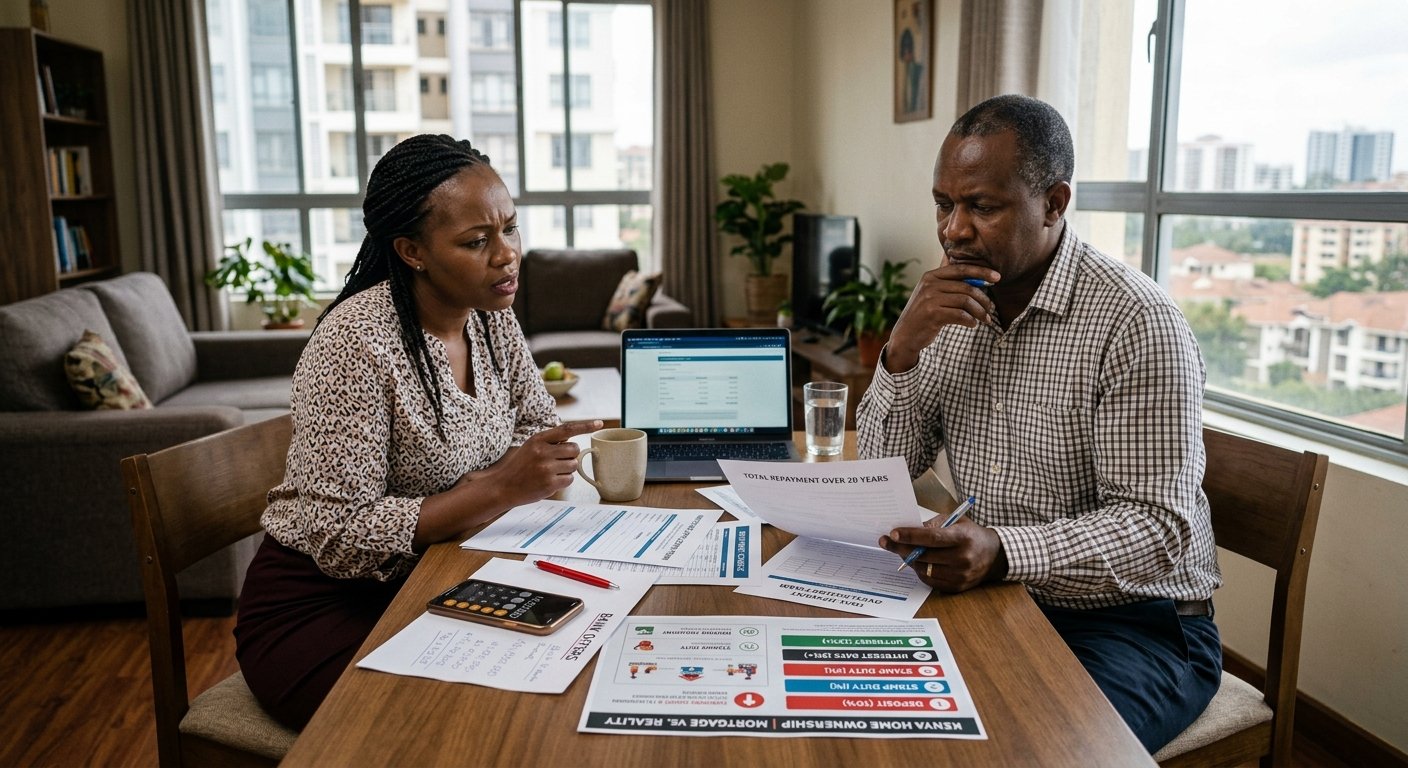
“I’d rather build slowly than owe a bank for 20 years.”
You may have heard someone say this when the subject of buying a home comes up. For many Kenyans, a mortgage means years of debt, interest, and the fear of losing a home if things go wrong.
Yet mortgages remain a common way to buy homes. So why do they make so many Kenyans uncomfortable, and are those fears justified?
The word “mortgage” already feels expensive
A mortgage can involve borrowing millions of shillings. Then there is the repayment period. Fifteen, 20 or 25 years can sound like a lifetime.
You may wonder whether you really want to owe a bank for that long.
That is part of what makes mortgages intimidating. You are not only thinking about today’s payment. You are thinking about a debt that could stay with you for years.
The real fear is what could happen later
This is where the concern becomes more real.
You may have a stable income today, but can you be certain it will stay the same for the next 20 years?
A job could change. A business could slow down. Your household expenses could increase. An unexpected financial problem could also make a payment that once felt manageable much harder to afford.
So before you ask whether a bank will approve your loan, ask yourself something more important: Could I still manage these payments if my financial situation changed?
But how expensive is the fear?
The cost of borrowing is another reason you may hesitate.
The price of the property is not necessarily the full amount you will spend when you finance it. Depending on the mortgage, you may also pay interest, valuation fees, legal costs, insurance, and other charges.
The repayment period matters too. A longer loan can reduce your monthly payment, but you could pay more overall.
There is another side to the calculation.
If you already pay rent, you are also spending money on housing every month. The difference is that rent does not give you ownership of the property.
That does not automatically make buying better than renting. Renting may suit you better depending on your income, plans and circumstances. But when you compare the two, look at the full cost rather than the monthly mortgage payment alone.
Some caution is sensible. Fear can go too far.
Being careful with a mortgage makes sense. Taking on more debt than you can manage does not.
If a mortgage would take up almost all your income, an emergency or unexpected expense could quickly put you under pressure. And if you sign a loan agreement without understanding the terms, you could face costs or conditions you did not expect.
But does that mean you should avoid mortgages altogether?
Not necessarily.
Borrowing to buy a property can make sense when you understand the loan and can comfortably afford the repayments. A mortgage is debt, but debt does not automatically make it a bad choice.
The difference is between taking on a commitment you can manage and taking on one you cannot afford.
When does a mortgage actually make sense?
This is where your situation matters.
If you have a stable income, enough room in your budget after making the monthly payment, and some savings to fall back on, a mortgage may be worth considering.
The property matters too. Are you buying a home you can see yourself living in for years? Does the price make sense? Are you comfortable with the location?
Then look closely at the loan.
Do you understand the interest rate? How much will you repay altogether? What other costs come with the mortgage? What happens if your circumstances change?
A bank can tell you how much it is willing to lend. That does not necessarily mean you should borrow the full amount.
Should Kenyans really be afraid of mortgages?
If you are considering a mortgage, you do not have to ignore the risks. But you also do not have to assume that taking one is a mistake.
The real danger comes when the loan does not fit your finances, or you take it without understanding the costs.
A mortgage that fits your situation can give you a practical way to buy a home.
So rather than asking, “Are mortgages dangerous?” ask yourself, “Does this particular mortgage make sense for me?”
If you can afford the repayments, understand the terms and have room for unexpected expenses, fear alone should not stop you from considering one.
Conclusion
A mortgage can feel intimidating because it involves a lot of money and years of repayment.
But you do not need to fear it simply because it is a long-term commitment.
Look at what you can afford, understand the total cost, and make sure the property fits your plans. If the numbers make sense, a mortgage can be a practical way to own a home.




Join The Discussion