
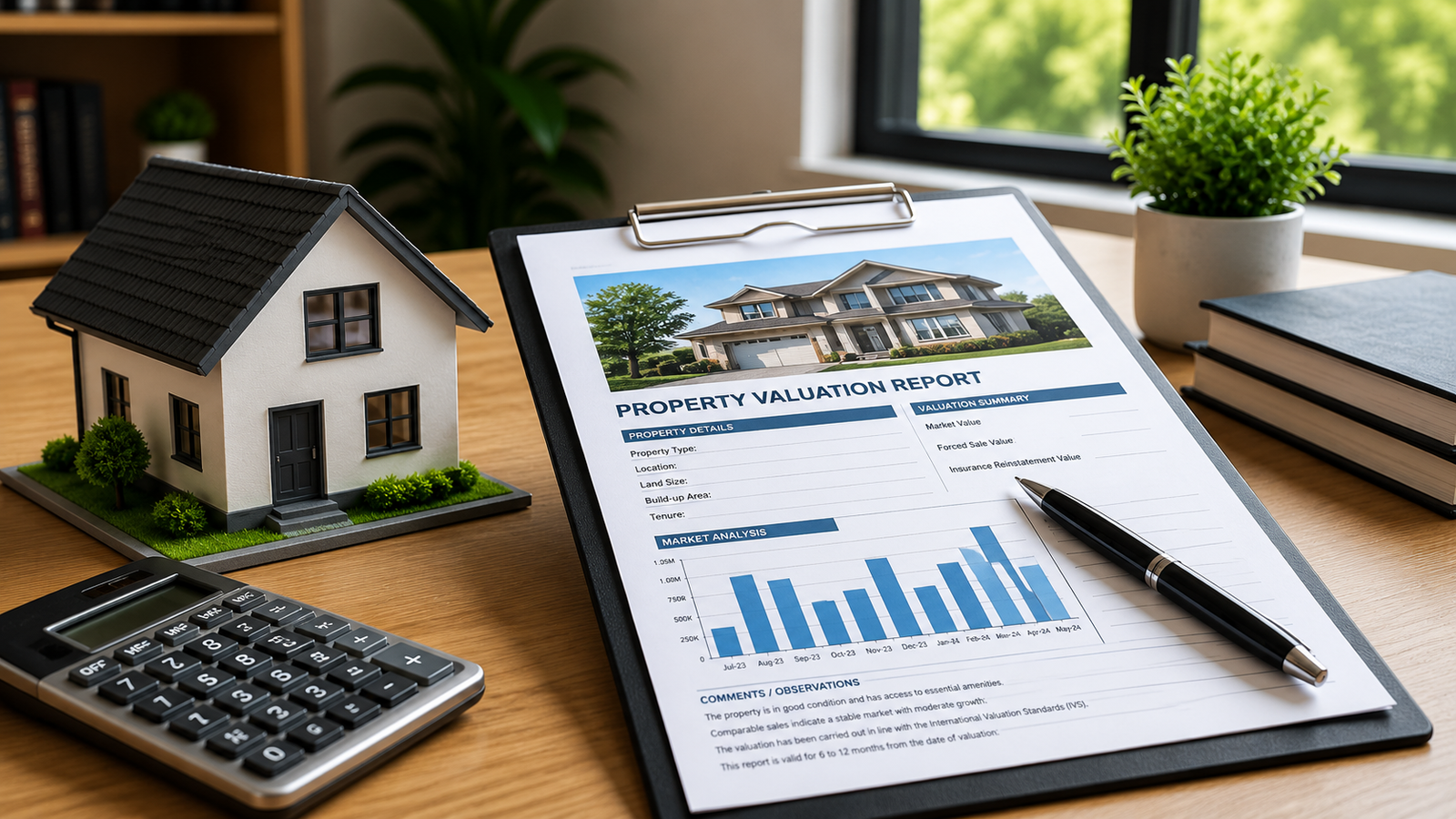
When you request a property valuation, you receive an objective assessment of what your house, apartment, commercial building, or land is worth in the current market.
You will need a valuation when you apply for a bank mortgage, clear Stamp Duty taxes on Ardhisasa, set an asking price for your home, or buy an insurance policy.
Before you hire anyone, verify that your valuer holds active registration with the Valuers Registration Board (VRB) and the Institution of Surveyors of Kenya (ISK). Banks and government institutions generally require valuation reports prepared by registered valuers. Reports from unaccredited individuals may not be accepted.
Step-by-Step Valuation Process
Your valuer follows a clear three-step routine from the moment you hand over your paperwork to the day they hand you a finished report.
Document Collection
First, you hand over your essential ownership documents. Your valuer needs a copy of your title deed, a recent official land search certificate, your Registry Index Map, and your approved building plans.
On-Site Physical Inspection
Next, your valuer visits your property to inspect the physical structure. They examine the foundation and roof, check room layouts, evaluate interior finishes, measure livable floor area, and note amenities like security systems and paved parking.
Market Analysis and Compilation
Finally, your valuer gathers recent, verified sales data for similar properties in your neighborhood. They compare those market figures with your property’s condition before determining its market value and preparing the final report.
Core Factors That Influence Property Value
Even when two houses look identical from the street, distinct legal and physical details quickly push their market prices apart.
Title Tenure
Your land tenure is one of the factors that influences your property’s value and how lenders assess it. Freehold properties often attract higher values because ownership is not limited by a lease term. If your house or apartment sits on leasehold land, your remaining lease period matters. A building with 80 years left on its lease holds far more value and bankability than one with only 15 years remaining.
Infrastructure and Utilities
Direct access to public utilities drives up your building’s worth instantly. A property connected to paved tarmac roads, reliable mains water, 3-phase electricity, and municipal sewer lines commands a much higher price than an identical building relying on rough access roads, water bowsers, or septic tanks.
Zoning and Density Limits
Local planning authorities set zoning rules that control how high or densely you can develop your plot. A building sitting in an area zoned for high-density commercial space or multi-story apartments carries a much higher underlying property value than one restricted to single-family residential use.
Property Valuation Costs and Regulatory Fees
Valuation fees aren’t set at random. Professional valuers follow an official fee scale set by law.
Fee Calculation Rules
Your valuer calculates their professional fee in accordance with a regulated scale under the Valuers Act. The total fee represents a small percentage of your property’s value, and that percentage rate drops as your building’s overall value increases.
Statutory Minimum Fee Rule
No matter how small your house or apartment is, the law sets a statutory minimum fee of KES 25,000 for any official valuation report.
Out-of-Pocket Expenses
Besides the main professional fee, you cover statutory disbursements. These out-of-pocket costs cover official search fees, map procurement, valuer travel expenses, and mandatory 16% VAT.
The Three Core Valuation Methods Used
Your valuer selects the most appropriate valuation method based on the type of property being assessed.
Direct Sales Comparison Approach
Your valuer compares your home directly against verified sale prices of similar houses or apartments sold recently in your estate. Valuers use this primary method for residential family homes.
Income Capitalization Approach
If you own rental apartments or an office block, your valuer estimates your property’s value based on the income it generates. They analyze rental income, occupancy rates, and operating expenses to determine its market value.
Cost or Replacement Method
When you own a unique or specialized building like a private school, hospital, or industrial factory, matching market sales rarely exist. Your valuer calculates what rebuilding your structure from scratch would cost at today’s material prices, then subtracts depreciation for age and wear.
Market Value vs. Forced Sale Value
Your valuation report usually includes more than one figure. Understanding what each one means helps you make informed decisions.
Market Value
Market Value shows the realistic price your property should fetch on the open market when both you and your buyer act willingly, knowledgeably, and without any pressure to close fast.
Forced Sale Value
Forced Sale Value reflects the estimated price a property may fetch if it must be sold quickly, such as at a bank auction. Because the sale takes place under time pressure, this value is generally lower than the Market Value.
Insurance Reinstatement Value
This figure estimates the cost to clear debris and rebuild your physical structure after a fire or disaster. It excludes your underlying land value completely because land does not burn down or disappear.
Conclusion
Once your valuation report is signed, keep in mind that most Kenyan banks, courts, and insurance companies consider a report valid for only 6 to 12 months. If your transaction takes longer or market conditions shift significantly, ask your valuer for a quick desktop update or re-inspection.
Having an accurate, current valuation places you in a position of strength whether you are negotiating a final purchase price, defending a property tax assessment, or understanding your rental income tax obligations.




Join The Discussion