
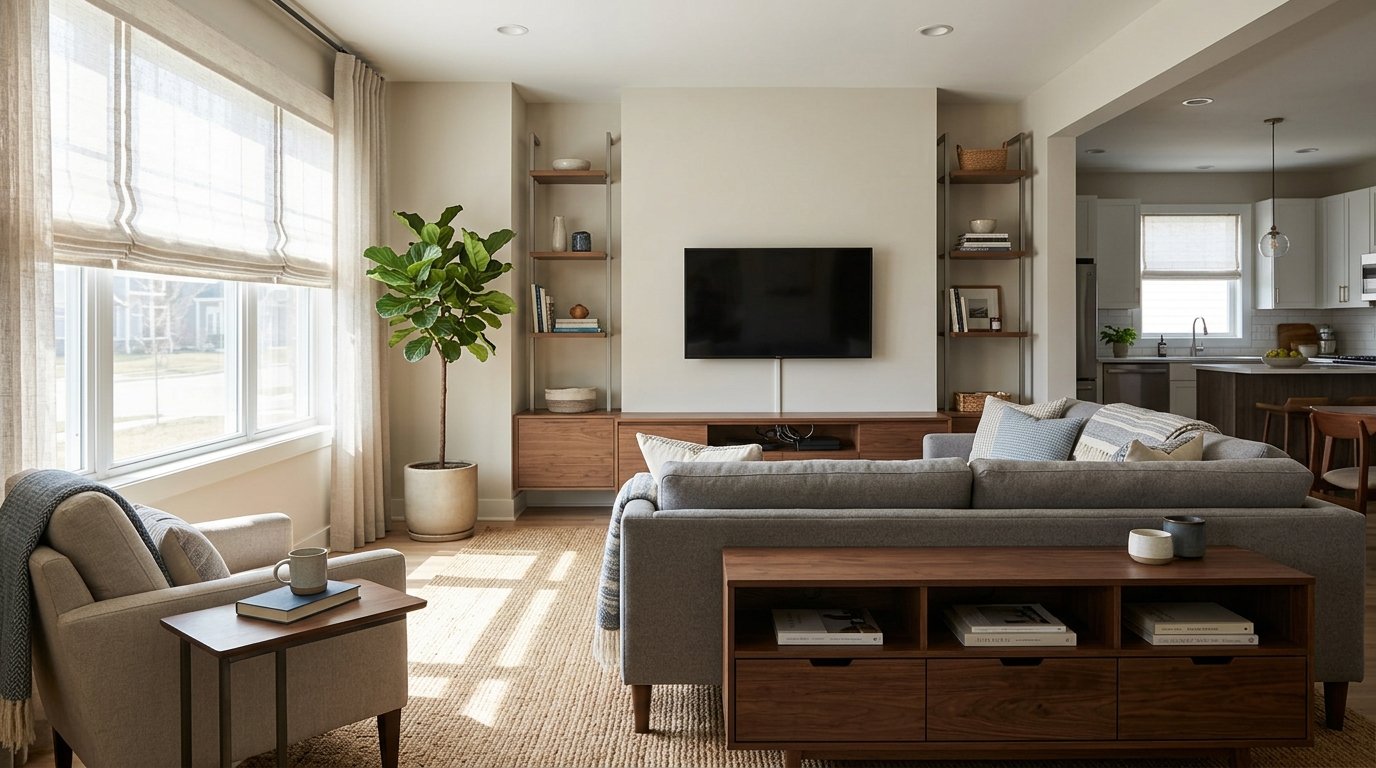
Designing a stylish and functional home shouldn’t feel like choosing between a museum and a messy living room. You can have both: a space that reflects your personal style while easily handling your daily routines.
Here is how to bring style, comfort, and function together in your space, step by step.
Step 1: Figure Out How You Actually Use Your Space
Before moving furniture or buying new decor, take a hard look at how your household moves through each room every day.
Mapping Your Daily Routines
Notice where your things naturally land when you walk through the door. If your bags end up on the dining table or shoes pile up by the entrance, design around those habits instead of fighting them. Place a sleek bench with shoe storage right at the door, or set up a dedicated drop zone for your keys and mail. That way, keeping your house tidy takes far less effort because your layout matches your actual routines.
Giving Every Room a Clear Main Purpose
Decide what each space needs to accomplish for you right now. If your living room doubles as your home office, set up a distinct corner with a compact desk and proper lighting instead of working off the couch. Grouping your furniture by function keeps every square foot useful without making the space feel chaotic.
Step 2: Set Up a Room Layout That Flows
You should be able to move through your home naturally without bumping into furniture or squeezing through narrow gaps.
Choosing Furniture That Fits the Space
Always measure your rooms before buying new pieces. Large sectional sofas quickly drown a compact living room, while tiny coffee tables get lost in open spaces. To fix this, leave at least two to three feet of walking space along your main pathways so moving between rooms feels effortless.
Making Use of Wall Space and Natural Height
When floor space is limited, look up. Floating shelves, tall bookcases, and wall-mounted lights keep your walkways clear while adding character to the room. From there, pull your main seating slightly away from the walls and angle it inward to create an inviting area for conversation.
Step 3: Layer In Style That Handles Real Life
You don’t have to sacrifice beauty for durability. The secret is picking finishes that look good and hold up to real daily wear.
Choosing Colors and Materials That Last
Connect your rooms by carrying a consistent color palette across your main living areas. Try sticking to a neutral tone for your walls and larger furniture, then bring in accent colors through smaller decor. For high-use pieces, select performance fabrics, treated leathers, or stain-resistant upholstery so you can easily wipe clean any accidental spills.
Lighting Your Rooms for Work and Relaxation
Relying on a single overhead bulb makes your space feel flat and harsh. Instead, layer your lighting by mixing ceiling fixtures with floor lamps and desk lights. Use bright, focused illumination over kitchen counters and desks, then switch to warmer, softer lamps in the evening when you want to wind down.
Adding Warmth Without Overcrowding
Rather than covering every flat surface with small decorative objects, build visual interest through varied textures. Pair a smooth wooden coffee table with a woven rug, a leather accent chair, or a soft throw blanket. This approach adds depth and warmth to your home while keeping your counters clean.
Step 4: Prioritize Real Comfort and Liveability
A stylish room means very little if you don’t actually enjoy spending time in it.
Designing for Everyday Physical Comfort
Focus your budget on the items your body touches every single day. Look for supportive sofa cushions, a quality mattress, and plush area rugs that cushion your steps. Indoor climate matters just as much, so keep fresh air moving with open windows or ceiling fans to maintain a pleasant temperature year-round.
Managing Light and Personal Privacy
Your window treatments should do more than frame a view; they need to control heat, glare, and privacy. Use layered drapes or adjustable blinds to block harsh afternoon sun while keeping your space private. Setting up a quiet, softly lit corner with supportive seating gives you a dedicated spot to unwind at the end of the day.
Step 5: Add Smart, Simple Storage
Good storage keeps your home looking organized long after your initial decorating is done. Without a clear system, even the best layouts quickly fall apart under daily clutter. Your goal isn’t to hide everything you own, but to make staying tidy feel effortless.
Choosing Dual-Purpose Furniture
Make your furniture work double duty to save space. Look for storage ottomans to hide extra blankets, coffee tables with drawers, or bed frames with built-in storage underneath. These dual-purpose pieces keep your daily items close at hand without leaving them scattered across open surfaces.
Easy Systems to Stop Clutter Before It Starts
Use matching baskets, deep drawers, and simple bins to give every small item a clear home. When putting things away takes only a few seconds, cleaning up becomes second nature. To keep things manageable, adopt a quick five-minute routine to clear off your counters each evening so clutter never has a chance to build up.
Moving Forward with Your Design
Designing a home isn’t about following rigid rules or copying showroom layouts. It comes down to paying attention to how you live, picking durable materials, and making sure your furniture supports your daily habits. Start with one room, fix the layout first, and let your personal style fill in the rest.




Join The Discussion