
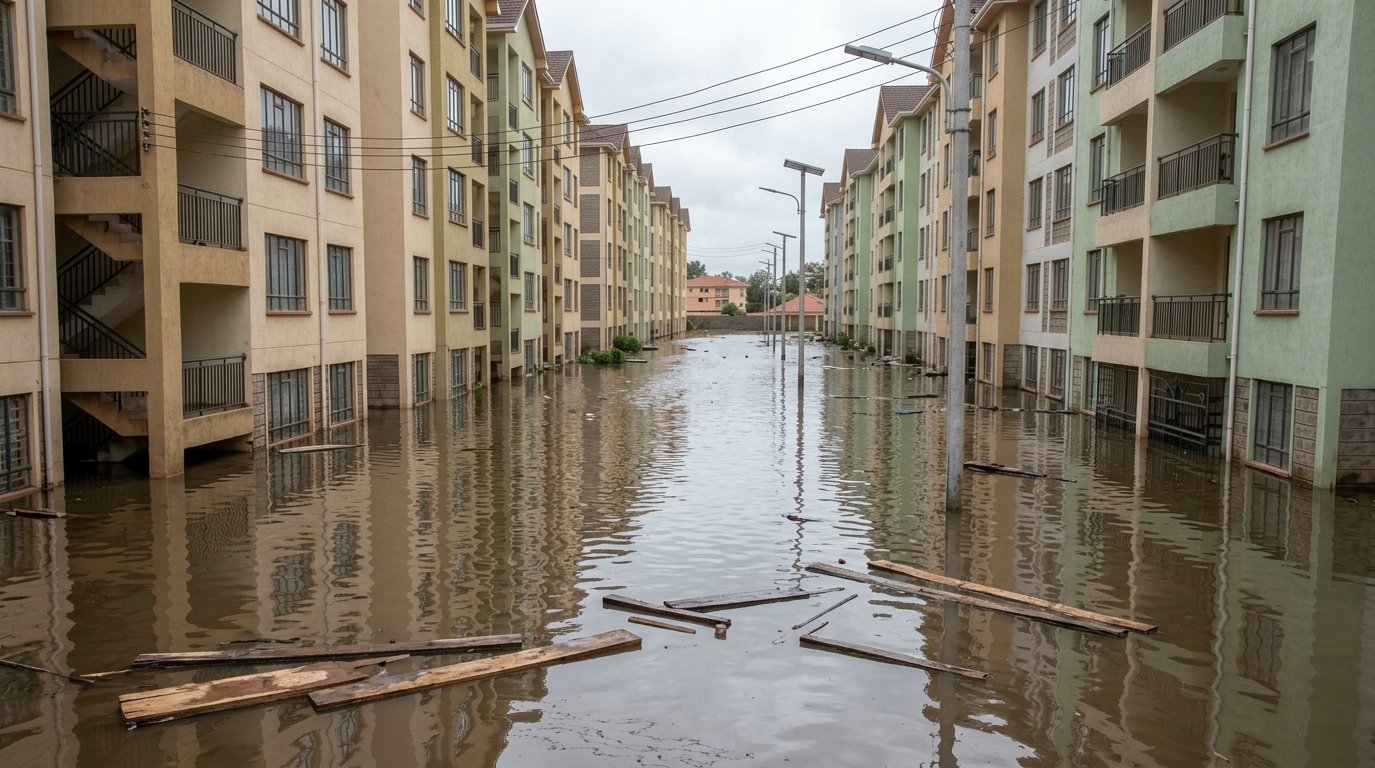
Let’s be honest: when El Niño hits, a few loose roof tiles pose the least of your worries.
The real threat comes from the water rushing down your street. When city storm drains fail, public runoff needs an escape route. Your boundary wall becomes a temporary dam, and your compound absorbs the full impact.
To protect your investment, look past your fence line and prepare for the bigger infrastructure failures around you.
1. Neighboring Infrastructure & External Drainage Risks
To understand where that water comes from, start by looking at the public roads right outside your gate.
When council trenches and culverts choke on trash and silt, heavy rains push torrents of water straight through your entrance. Because your drainage system connects directly to that network, public blockages quickly become your problem.
- Assess your access roads: Flooded entrance gates and low-lying bridges trap your tenants instantly.
- Map your topography: When neighboring developments sit higher than your land, you receive all their uncontrolled runoff.
Trace those water pathways today so you can redirect the flow before downpours start.
2. Structural Resilience & Land Stability
Once you manage the water moving across your boundary, turn your attention to the physical structures holding that weight back.
Soaked soil creates massive lateral pressure against concrete and masonry. Inspect your perimeter walls, retaining barriers, and earth embankments today for small cracks or slight leans. Once heavy rains saturate the earth, that crushing weight collapses weak walls without warning.
In addition to wall stability, watch for threats from below and above:
- Rising water tables: Hydrostatic pressure forces groundwater directly up through concrete floor slabs, rotting your foundations from underneath.
- Roof accumulation: Flat roofs on apartment blocks collect thousands of liters of standing water. Blocked drainage outlets force that weight down, destroying flashings and ceiling structures.
3. Critical Utilities & Shared Estate Services
Even if your walls hold firm, water creates a second, quieter line of destruction through your essential utilities.
Severe flooding wrecks critical estate systems long before it knocks down a physical barrier. Dirty surface runoff quickly invades underground sumps, boreholes, and low-level storage tanks, ruining your clean water supply for weeks.
At the same time, your electrical infrastructure faces immediate danger. Mount main distribution boards, transformers, and power meters high off the ground to prevent short circuits and extended blackouts.
Meanwhile, sanitation demands equal foresight. Overwhelmed municipal storm lines force septic tanks and sewer mains to back up directly into ground-floor living spaces.
4. Landlord Liability, Tenant Safety & Financial Exposure
Beyond the physical bricks, mortar, and wires, severe weather also tests your business operations and legal responsibilities.
Managing property during severe weather requires active risk management. If you manage or own rental property, warn your tenants today. Identify flood-prone parking spots, map clear evacuation routes, and distribute emergency contact numbers before storms strike.
Simultaneously, review your insurance policy terms. Most standard insurers deny flood claims resulting from unmaintained drains or obvious structural neglect. Preventable water damage leaves you paying massive restoration bills out of pocket, losing frustrated tenants and tanking your property value.
Conclusion
When you pull all these pieces together, the reality is clear: you cannot control council drainage, nor can you stop the rain. You can, however, fortify your own boundary.
Walk your compound this week. Map out where external runoff travels, clear your channels, and reinforce your weak spots before the ground saturates.
Taking decisive action today saves your equity, protects your tenants, and spares you from catastrophic repair bills tomorrow.




Join The Discussion