
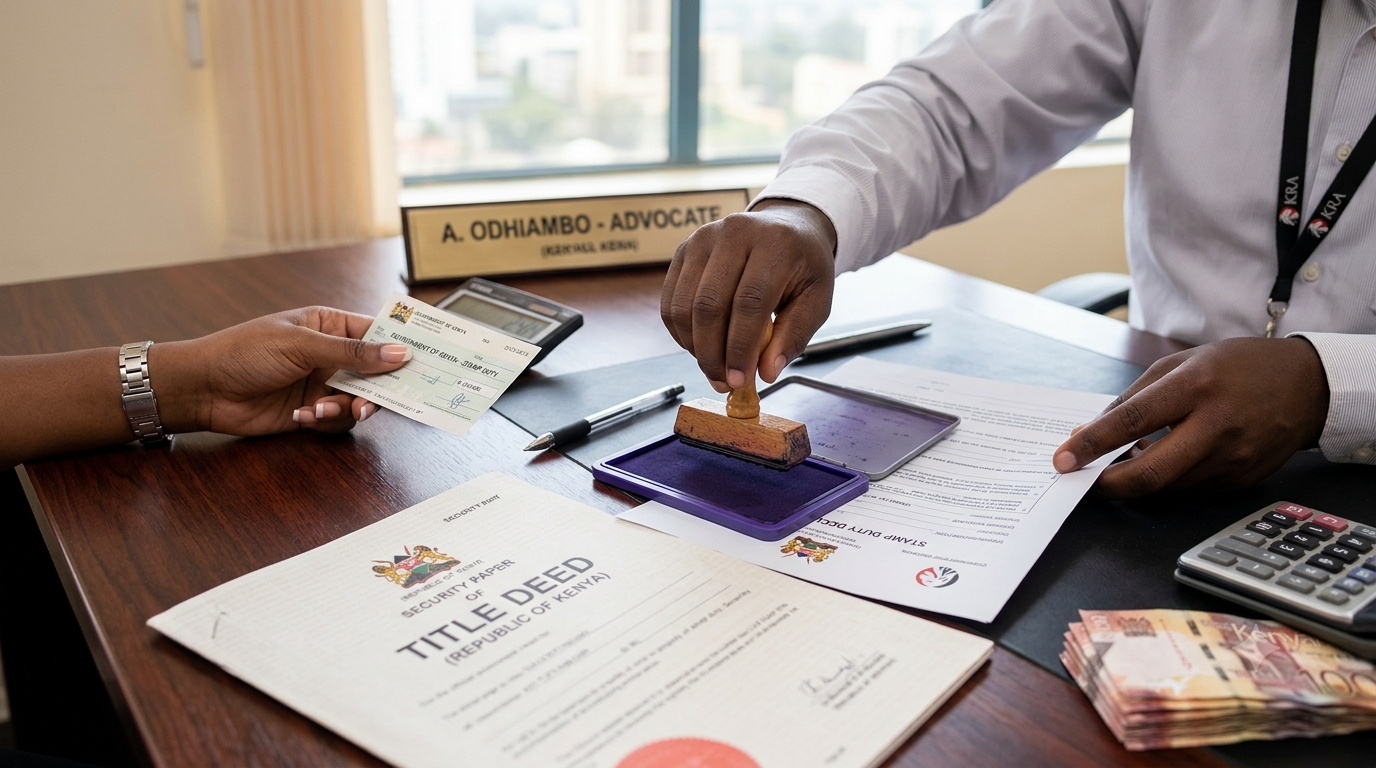
When you buy property in Kenya, the purchase price isn’t the only cost you need to plan for. Before ownership can be transferred into your name, you must pay stamp duty, a government tax charged on most property transactions.
Understanding how stamp duty works before you buy gives you a clearer picture of the total cost of the property. It also helps you prepare for the transfer process and avoid unexpected delays.
What Is Stamp Duty on Property in Kenya?
Stamp duty is a government tax you pay when ownership of a property changes from one person or entity to another. Whether you’re buying a house, an apartment, commercial property, or land, stamp duty is usually part of the transaction.
The government requires this tax before it registers the property in your name. Until you pay it, you can’t complete the legal transfer of ownership.
In most cases, a government valuer first assesses the property’s market value. Once the valuation is complete, you pay the required stamp duty before the land registry registers the transfer documents. Unless your sale agreement states otherwise, the buyer is responsible for paying the tax.
How Much Is Stamp Duty on Property in Kenya?
The amount of stamp duty you pay depends on two factors: where the property is located and the value assigned by the government valuer.
Kenya applies different rates to urban and rural properties. The current rates are:
- 4% of the property’s value for urban properties.
- 2% of the property’s value for rural properties.
It’s also worth knowing that the government doesn’t always use the purchase price to calculate stamp duty. Instead, it relies on the official valuation carried out by a government valuer. If that valuation differs from the price you agreed on with the seller, the stamp duty will be based on the government’s assessed value.
Understanding this process can help you estimate the amount you’ll need to pay before you complete the purchase.
How Do You Pay Stamp Duty in Kenya?
Once you’ve signed the sale agreement, you’ll go through a few steps before the property can be transferred into your name.
Property valuation
The process starts with a government valuation. A government valuer inspects the property and determines its market value. This valuation forms the basis for calculating the stamp duty you’ll pay.
Assessment of stamp duty
After the valuation, the relevant authorities calculate the stamp duty using the assessed value and the applicable rate. Once they complete the assessment, you’ll know the exact amount you need to pay.
Payment through eCitizen
You can then pay the stamp duty through the eCitizen platform. After making the payment, you’ll receive proof of payment, which you’ll need when registering the property transfer.
Property registration
The final step is registering the transfer documents with the land registry. Once registration is complete, ownership of the property officially passes to you.
Are There Any Stamp Duty Exemptions in Kenya?
Yes. Kenyan law allows stamp duty exemptions or relief for certain property transfers.
For example, transfers between spouses may qualify for an exemption if they meet the legal requirements. The law also provides exemptions for certain government transactions and other qualifying transfers.
If you believe your transaction qualifies, confirm your eligibility before making the payment. Your advocate or the relevant government office can advise you on whether you meet the legal requirements and what documents you need to support your application.
Frequently Asked Questions
Who Pays Stamp Duty on Property in Kenya?
The buyer usually pays stamp duty unless the sale agreement states otherwise.
Can You Pay Stamp Duty Online?
Yes. After a government valuer assesses the property and the authorities determine the amount payable, you can pay stamp duty through the eCitizen platform.
What Happens If You Don’t Pay Stamp Duty?
If you don’t pay stamp duty, the land registry won’t register the property in your name. As a result, you can’t complete the transfer of ownership until you settle the tax.
Conclusion
Stamp duty is a mandatory part of buying property in Kenya, so it’s important to understand how it affects your purchase before you sign the final documents. Knowing the applicable rates, how the government calculates the tax, and the steps involved in paying it allows you to prepare for the transfer process with fewer surprises.
Before completing your purchase, take time to confirm how much stamp duty you’ll pay and whether your transaction qualifies for an exemption. Planning for this cost early can help you complete your property purchase smoothly and avoid unnecessary delays.




Join The Discussion