
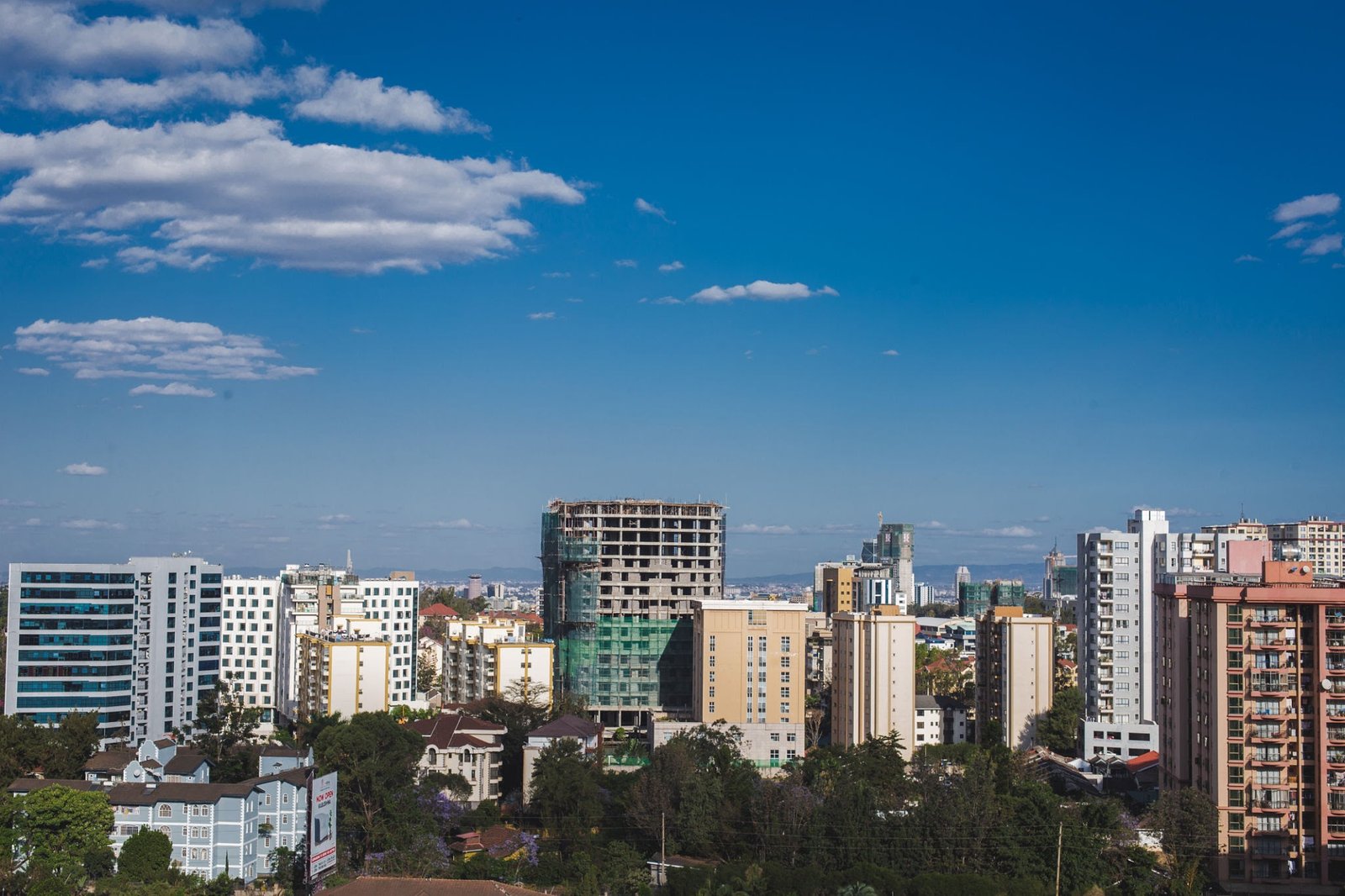
Look around Nairobi, and you will notice something: apartment buildings keep going up. Yet apartment affordability in Kenya remains a challenge for many people trying to buy a home.
If you are trying to buy an apartment, finding one is often not the hardest part. Affording it is.
That raises a simple question: if Kenya keeps adding apartments, why is owning one still so difficult?
The answer is not just about how much housing is being built. It is also about what type of apartments are entering the market, how buyers finance them, and what ownership actually costs.
What Kind of Apartments Are Being Built?
Not every new apartment is designed for the same buyer.
In areas where land is expensive, developers often build upwards to make better use of the available space. This can result in projects with many smaller units, particularly studios and one-bedroom apartments.
These units can appeal to investors looking for rental income.
For a family looking for a long-term home, however, a small unit may not be practical. A two- or three-bedroom apartment may be more suitable, but it also comes with a higher price.
That creates an important distinction in the market: the number of apartments being built does not tell you whether the right type of homes are being built for every buyer.
The Price Tag Is Only the Beginning
A developer might advertise a two-bedroom unit for KES 7 million. On paper, that number gives you somewhere to start.
But the purchase price is not your only expense.
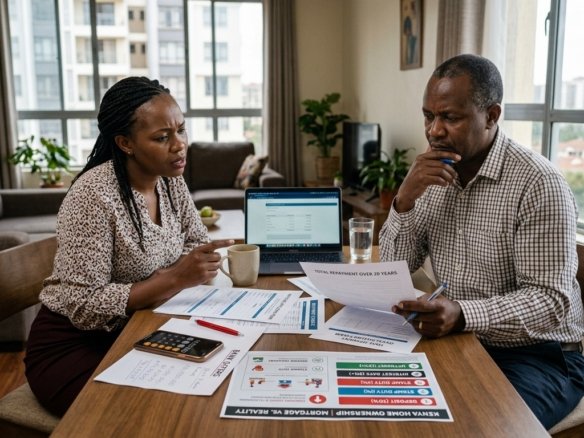
You may also need to budget for:
- Down payment: A deposit may be required before the purchase proceeds.
- Legal and government fees: Stamp duty, advocate fees, and valuation costs add to the upfront amount.
- Service charges: These cover shared costs such as security, cleaning, and maintenance.
- Insurance and loan costs: Mortgage protection, home insurance, and loan-related fees can add to your expenses.
Then there are the costs you continue paying after moving in.
So before deciding that an apartment is affordable, you need to calculate what owning it will cost you each month and over the life of the purchase.
Mortgages Are Still Out of Reach for Many Buyers
Even if you manage to save the deposit, financing can become the next obstacle.
Commercial lending rates can still be high. A larger loan combined with a high interest rate can push monthly repayments beyond what many households can comfortably manage.
Banks also assess your income, existing debts, and ability to repay.
That means qualifying for a mortgage is not the same as being comfortable with the repayment.
A loan may be approved, but if the monthly instalment leaves you struggling to cover rent, food, transport, school fees, or savings, the property may still be too expensive for your circumstances.
Why Developers Keep Building
So why does apartment construction continue if buying remains difficult for many households?
Because developers are responding to more than owner-occupier demand.
Rental demand is one reason. People who cannot afford to buy still need somewhere to live, creating a market for landlords.
There is also the investor market. Some buyers purchase apartments because they expect rental income or long-term appreciation rather than because they want to live in the unit themselves.
And in expensive urban areas, apartments allow developers to create several units on one piece of land.
So a project can make financial sense even when many first-time buyers cannot afford to purchase one of its units.
Lower Prices Do Not Always Mean Affordable Prices
This is where the apartment market gets interesting.
In some parts of Nairobi, apartment prices have come under pressure. But a lower price does not automatically turn a property into an affordable home.
Imagine an apartment that was already beyond your budget. If its price falls slightly, you may still not be able to buy it.
The same applies to financing. A cheaper apartment can still be difficult to own if the deposit is too large or the monthly mortgage repayment is beyond your income.
So price reductions alone cannot solve the homeownership problem.
Affordability depends on the relationship between the property price, financing, and your income.
What Would Make Apartment Ownership Easier?
The market needs to look beyond simply increasing the number of units.
A few changes could make ownership more realistic:
- Practical unit sizes: Developers can provide smaller, functional homes without making them unsuitable for long-term living.
- Better financing: Longer-term and more predictable loans can help buyers manage monthly repayments.
- Clearer costs: Buyers should know the deposit, legal fees, taxes, apartment service charges, and other costs before committing.
- Better-located developments: Access to roads, water, transport and other services can affect both the price and the cost of living in a property.
For buyers, the same lesson applies.
Do not judge an apartment by its advertised price alone. Work out what you will need upfront and what you will have to pay every month afterwards.
Conclusion
The apartment boom suggests property developers see continued demand for urban housing. But construction alone cannot solve the ownership problem.
What matters is whether the homes being built fit the financial reality of the people who want to buy them.
If you are considering an apartment, look at the full cost, not just the headline price. And if the numbers do not leave you enough room to live comfortably, the fact that a bank is willing to finance the purchase does not necessarily make it a good buy.
The next challenge for Kenya’s apartment market is not simply building more. It is making ownership work for more people.


Join The Discussion